SHAMBALA
INVESTMENT
Bangkok Property Market 2026
· Shambala Editorial
After several difficult years, Bangkok’s housing market is finally showing signs of recovery in 2026, but it is a two-speed recovery. Well-located condominiums near transit lines and in the luxury segment are selling well, while the wider market is still working through a large stock of unsold homes. For buyers, that combination creates real opportunities.
Sales are recovering
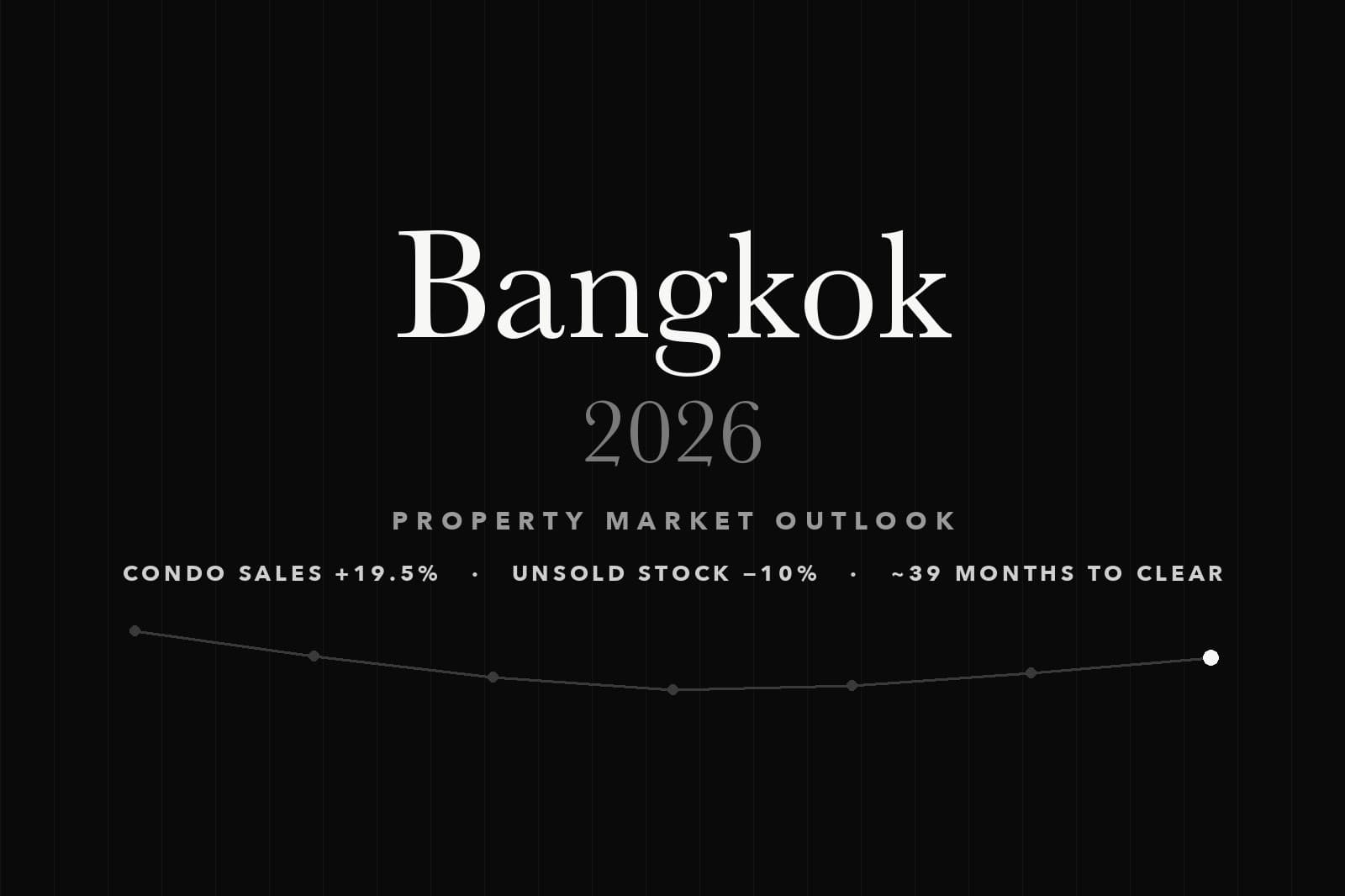
According to Thailand’s Real Estate Information Center (REIC), new condominium sales in Greater Bangkok rose 19.5% year on year in the second quarter of 2026, while sales of houses and other low-rise homes fell 11.4%. Developers have also slowed down: new project launches dropped 15.6%, and total unsold inventory fell 10.2% to 202,414 units.
Knight Frank reports a similar improvement in how quickly new projects sell: during the second quarter of 2026, about half of newly launched units were reserved during their launch period, a sharp rise from very weak levels in 2024. CBRE found that completed downtown condominium projects were 93% sold in the first half of 2026, and completed luxury projects 95%.
…but there is still a lot to sell
- At the current pace, REIC estimates that unsold condominiums would take about 39 months to clear, and low-rise houses around 67 months.
- Knight Frank estimates roughly 350,000 unsold condominium units across Bangkok, which could take five to six years to absorb, and expects buyers to keep strong negotiating power on price, incentives and payment terms.
Why launch prices are rising
Cushman & Wakefield reports that the average selling price of condominiums launched in the first half of 2026 reached about ฿120,360 per sqm, the highest first-half figure since 2020. That does not mean every condo is getting more expensive. Developers are concentrating new launches on higher-end, often ready-to-move-in projects, and about 90% of second-quarter launches were along the BTS Sukhumvit line outside the central business district. Almost all launches came from large listed developers.
Across the wider market, developers have generally protected their headline prices and competed through discounts, free extras and payment plans, so the real price paid is often lower than the price on the brochure.
Foreign buyers
- Foreigners can own condominium units freehold, within the 49% foreign quota of each building. A proposal to raise the quota to 75% has been discussed by the government but is not law; don’t buy on that assumption.
- Cushman & Wakefield notes continued declining demand from Chinese buyers, a modest increase from Myanmar, and Russian demand concentrated in resort markets such as Phuket and Pattaya rather than Bangkok.
Interest rates and lending
The Bank of Thailand cut its policy rate to 1.00% in February 2026, and has proposed extending its relaxed loan-to-value rules for home loans until June 2027. This mainly helps Thai buyers and residents who borrow from Thai banks; most foreign buyers still pay cash or arrange finance abroad.
What we expect for 2026–2027
- Prime, transit-linked and luxury condominiums should stay resilient, with limited new supply in the core city.
- Mass-market and suburban projects are likely to see flat prices and continued promotions while the inventory clears.
- The resale market remains a buyer’s market: patient buyers can often negotiate well below asking prices.
- Rental yields in central Bangkok are typically quoted at around 3–5% gross, lower after costs: steady, year-round income rather than high returns.
Sources
- Real Estate Information Center (REIC), Q2 2026 data, via The Nation
- Knight Frank Thailand, via Real Estate Asia
- Cushman & Wakefield, Thailand Real Estate Market Update 2026
- The Nation, Bank of Thailand draft to extend LTV easing
Figures as of October 2026, from the sources listed above. This is general market information, not investment or financial advice. Property values can fall as well as rise; take independent advice before buying.