 SHAMBALA
GUIDES
High Season vs Low Season in Phuket: When to Rent and How Prices Change
· Shambala Editorial
Ask anyone who has rented in Phuket and they will tell you the same thing: when you rent can matter as much as where. The same apartment can cost almost twice as much in December as it does on a twelve-month lease. Here is how the seasons work, what they do to prices, and how to time your move.
The two seasons, in brief
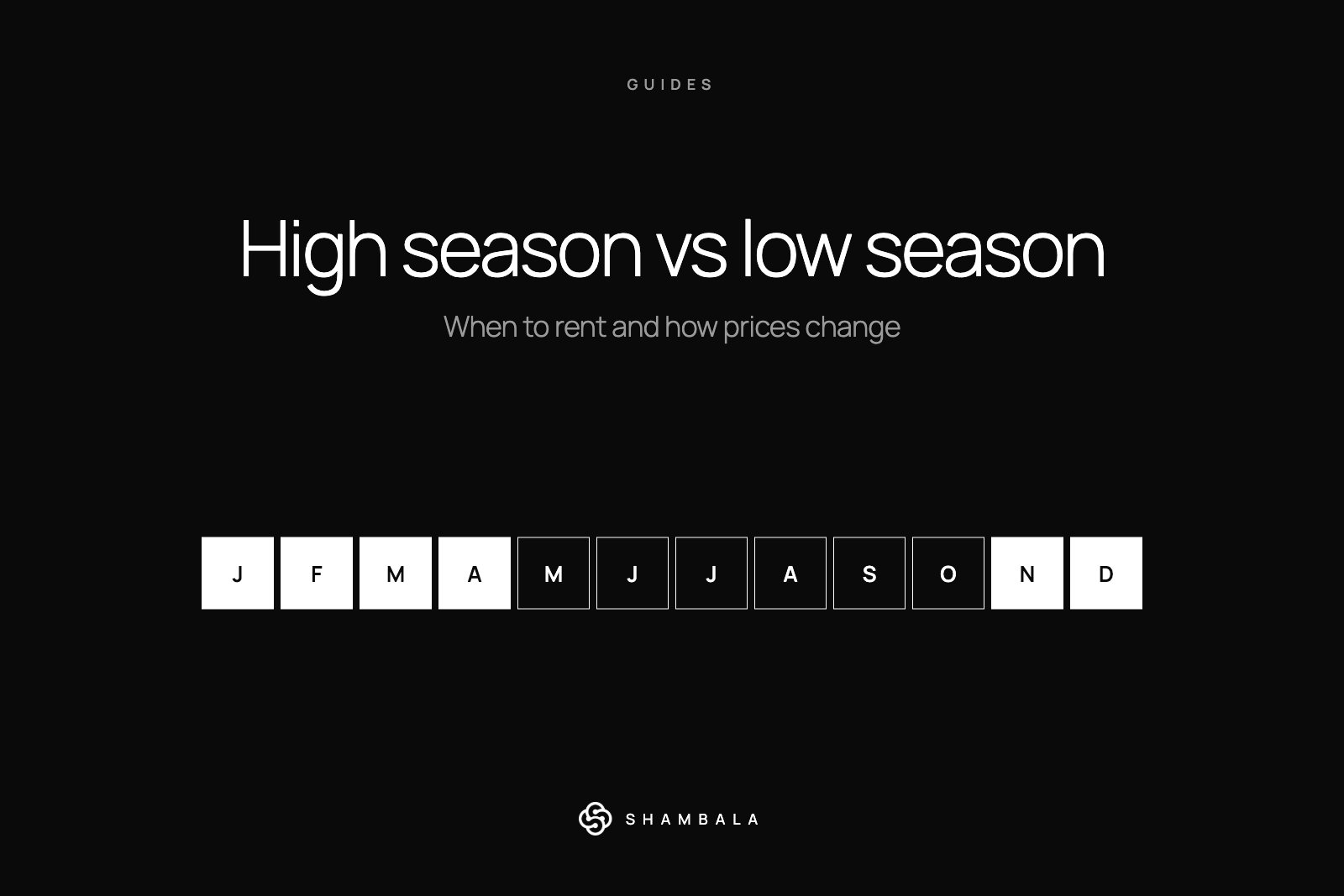
- High season: roughly November to April. Dry, sunny and calm seas on the west coast. The busiest weeks are Christmas, New Year and Chinese New Year, and March–April is the hottest part of the year.
- Low season (also called green or rainy season): roughly May to October. The south-west monsoon brings more rain, often in heavy bursts followed by sunshine rather than all-day downpours. September and October are usually the wettest months. Seas on the west coast can be rough, with red flags on beaches such as Kata, Karon and Patong.
Patterns shift a little every year, but this rhythm drives the whole rental market.
How prices change: a real example
Take a one-bedroom condominium we currently list in Saturdays Residence, Rawai:
| Rental option | Monthly price |
|---|---|
| Year-round lease | ฿50,000 |
| 4 months, November–March | ฿90,000 |
| 3 months, November–February | ฿95,000 |
That is 80–90% more per month for the same apartment, simply for renting short-term in the high season. Not every property has such a wide gap, but the direction is the same across the island: short stays in peak months cost the most, and long leases cost the least.
Why the gap is so big
- Owners can earn more from holiday guests in the high season, so a short-term tenant has to compete with nightly rentals.
- A long lease gives the owner security: a full year of income, including the quieter months. They price that certainty in your favour.
- Demand is concentrated. Snowbirds escaping the northern winter, remote workers and families all arrive between November and March and compete for the same well-located homes.
When to rent: three common situations
1. You want to spend the winter in Phuket
Expect to pay high-season rates, and book early: the best homes for December–February are often taken by September or October. Ask whether a 4–5 month stay (for example November–March) gets a better monthly rate than 2–3 months. It often does.
2. You’re moving to Phuket for a year or more
Sign a 12-month lease. You get the lowest monthly rate, and you are protected from high-season price jumps. If you can choose, start looking in the low season (May–October): there is more choice, owners are keener to secure a tenant, and there is more room to negotiate.
3. You’re flexible on dates
The low season is the best value of all. Many owners prefer a tenant to an empty home, so 3–6 month stays from May to October can be surprisingly affordable. Just choose a home with good air-conditioning, reliable drainage and covered outdoor space.
Practical tips for any season
- Check what’s included. Electricity is usually billed separately, and air-conditioning use peaks in the hot months (March–May). Ask for the electricity rate and put it in the contract.
- Look at the property in the rain, or ask the owner about drainage, damp and access roads in the wet season.
- Read the notice and early-exit terms. Seasonal plans change, and you don’t want to lose a large deposit.
- Consider the coast. In the low season, the west-coast beaches can be rough for swimming. Areas such as Rawai and Nai Harn, or homes with a private pool, keep life pleasant all year.
The bottom line
If you’re staying a few months, book early and accept high-season prices, or come in the green season and enjoy much better value. If you’re staying a year or more, a 12-month lease signed in the low season is almost always the smartest move.
Browse our properties for rent, explore the area guides, or message us with your dates and budget, and we’ll tell you honestly what to expect.
Prices shown are real examples from our listings as of October 2026; rates vary by property, location and length of stay. Seasonal weather patterns differ from year to year.
QUESTIONS & ANSWERS
When is high season in Phuket?
Roughly November to April, when the weather is dry and the west-coast seas are calm. The busiest weeks are Christmas, New Year and Chinese New Year. The low (green) season runs roughly May to October.
Is it cheaper to rent long-term in Phuket?
Yes, usually much cheaper per month. In one of our Rawai listings, the same apartment costs ฿50,000 a month on a 12-month lease and ฿95,000 a month for a three-month stay from November to February.
When should I start looking for a winter rental?
By September or October. The best homes for December to February are often taken early. For a 12-month lease, the low season (May–October) usually offers more choice and room to negotiate.